Sexual and reproductive health: a life-long issue for our communities
Published: March 23, 2026
Blog
In the world of women’s health, when we talk about sexual and reproductive health, many people think of having babies, breast cancer, or perhaps menopause. In reality, sexual and reproductive health is life‑long and stretches from a girl’s first period through to older age, and it quietly shapes the health, wellbeing and productivity of individuals and our entire community.
Sexual and reproductive health (SRH) encompasses a person's physical, mental and social wellbeing related to the reproductive system and sexual life and is vital for individual wellbeing and community participation. It includes maternal child health, contraception, Sexually Transmitted Infection (STI) testing and treatment, abortion care and the screening and management of chronic reproductive conditions like endometriosis, heavy periods and menopause.
Sometimes these topics can feel uncomfortable. But avoiding them carries a cost that might include poorer health outcomes, more pressure on our health system, and lost opportunities for women and families. Talking openly and practically about sexual and reproductive health is not - and should not be - about ideology. It’s about basic health care and fairness.
SRH access is fundamental to people’s rights to equality, privacy and bodily autonomy. It is an essential enabler to other human rights, including to health, education, work and full participation in public life. Despite this, the health of women and gender-diverse people has long been under-resourced and under-researched, creating systemic gaps in equitable care. In 2023-2024, only 3.3% of government research funding went to women’s health.
Limited access to SRH services can increase unintended pregnancies, unsafe abortions, maternal mortality and STI transmission. It can impact health, mental health and wellbeing, including impacts on relationships. It can also entrench poverty, reinforce gender inequality, and add pressure to the public health system.
Women’s sexual and reproductive health is not a “women’s issue”. It is a family, community and economic issue. It affects men as partners and as fathers. It impacts employers and the workforce. It affects the health of babies and children. It has an influence on how our communities thrive.
Good sexual and reproductive health is not an “optional extra”.
In simple terms, good sexual and reproductive health is about giving women the knowledge, services and support they need to have safer pregnancies to manage their periods and symptoms, to prevent and treat disease, to age well and the choice about if and when they have children.
Some good news is that the historic patterns around sexual and reproductive health are starting to shift.
At a national level, the Australian Government has established a National Women’s Health Strategy (2020–2030) that specifically prioritises sexual and reproductive health. In recent years, budgets have included dedicated funding for women’s health research, endometriosis and pelvic pain clinics, and improvements to contraception and abortion access under Medicare.
These are important steps. But, in rural and regional settings the gap is significant. There is much more to do to make sure our communities can benefit from existing investments, and to ensure that appropriate investment and action for improvement keeps coming.
In our regional communities, geographical distance, lengthy wait times, lack of local services, challenges around perceived privacy and issues of stigma all impact access to services.
In women’s health, and particularly sexual and reproductive health, many women have had the experience of having their symptoms downplayed or explained away as a normal part of a woman's life. Some women feel they must “soldier on” rather than speak openly about what they are experiencing. To make it worse, by overlooking women’s experiences, we run the risk of missing the gaps in service delivery. We can’t rely on statistics alone; we need to be listening.
We also need to pay close attention to the doctors, midwives, nurses and allied health professionals who are trying to deliver these critical services in stretched regional systems. They know where referral pathways break down, where telehealth could help, and where change would make a real difference.
When decision‑makers bring together women’s lived experience and the practical insights of health professionals, we have a real chance at developing solutions that actually fit local realities. Listening well is one of the most effective tools we have.
So, we are listening.
At Women’s Health and Wellbeing Barwon South West, we have undertaken a community-wide consultation inviting women, gender diverse folk and health professionals to share their experiences about sexual and reproductive health in the Barwon South West. 450 community members shared their stories and experiences courageously, vulnerably and honestly. They shared the concerns and barriers to accessing and delivering sexual and reproductive health services, they shared the things that work, and they shared the actions that can make things better.
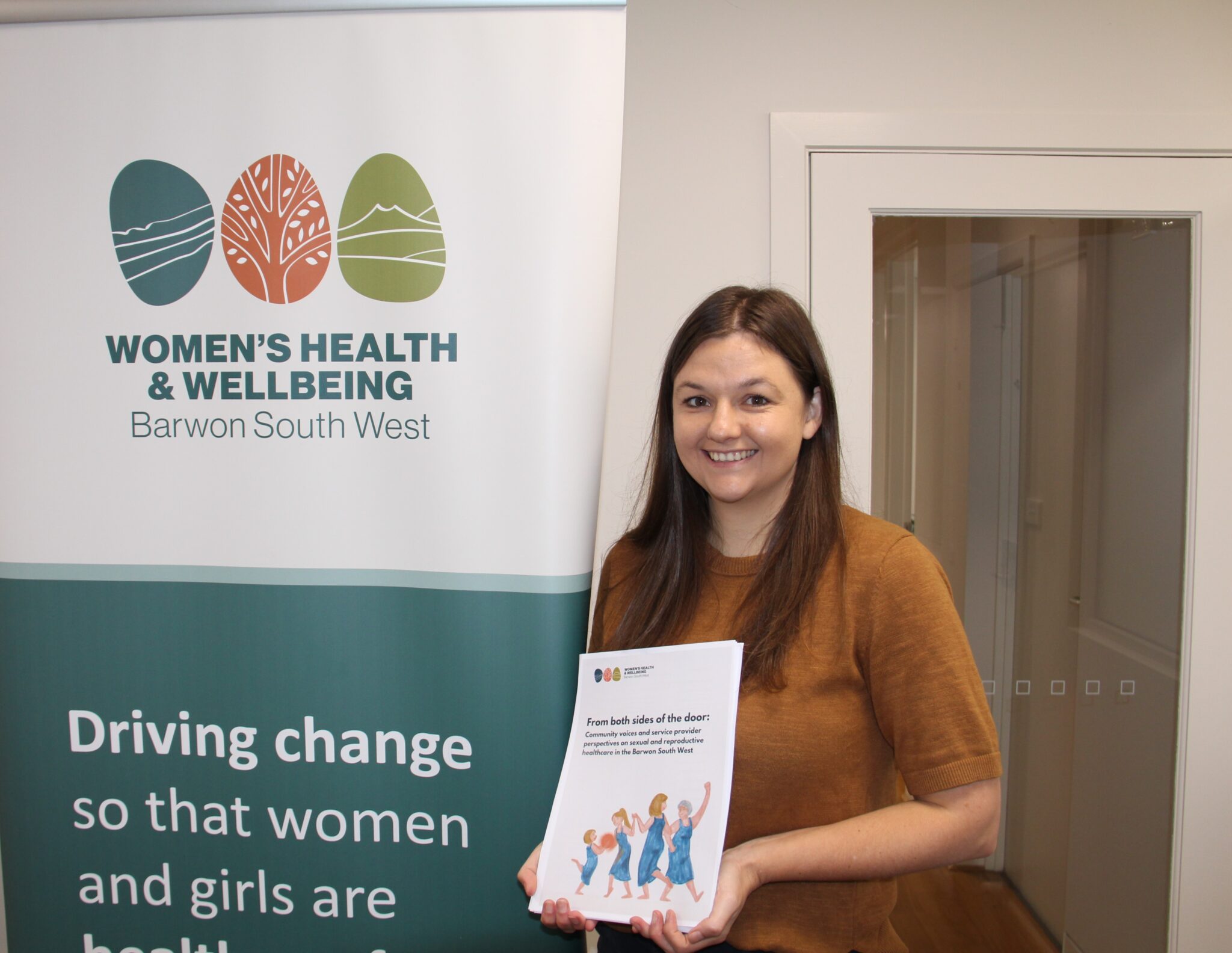
The findings from that consultation were launched this week in the “From both sides of the door” report. The report adds the real-world experience and relatable living colour to the data on access to sexual and reproductive health services. It identifies barriers that women and gender diverse people encounter when seeking care including limited access to menopause and perimenopause information; inadequate access to mental health support and physiotherapy during pregnancy and after the birth of a baby. The report also distils key recommendations to drive action for change.
So, we are listening and acting to make the sexual and reproductive health landscape better. By acknowledging the historic neglect of women’s health, welcoming the recent positive investments, insisting that the regions are not left behind; and by listening carefully to women and to the health professionals who care for them; we can drive the building of healthier lives for women and stronger, more resilient communities for everyone.
I invite you to listen too. Read this report and learn from our community. Participate in this conversation, understand and talk about this issue. Normalise having full, frank and fearless conversation about sexual and reproductive health.
You can access the full report here : Full report: From both sides of the door