From Both Sides of the Door: Sexual and Reproductive Health in Barwon South West
Women and gender diverse people in regional and rural areas often face complex barriers when accessing sexual and reproductive healthcare (SRH).
Community Consultation
To better understand these challenges, we consulted with the community and healthcare providers in the Barwon South West about their experiences accessing services or delivering care and education.
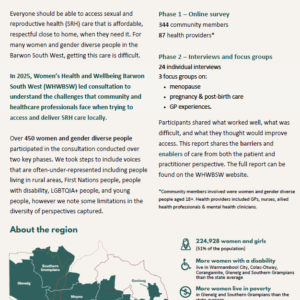
In 2025, over 400 women, gender diverse people, and healthcare providers completed our community consultation survey. You can view the survey outcomes in our Survey Snapshot, which summarises early findings at the mid-point of the consultation.
Interviews and Focus Groups
The next phase involved interviews and focus groups to explore issues in more depth. In late 2025,
- 24 individual interviews were conducted
- three focus groups held exploring Menopause, Pregnancy and post-birth care and GP experiences
Participants included women and gender diverse people aged 18+, and health providers such as GPs, nurses, allied health professionals, and mental health clinicians. Efforts were made to include voices often under-represented, including rural residents, First Nations people, people with disability, LGBTQIA+ people, and young people, however we note some limitations in the diversity of perspectives captured.
Launch of the Report
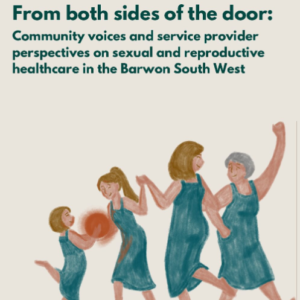
Our findings have now been compiled into a report From both sides of the door: Community voices and service provider perspectives on sexual and reproductive healthcare in the Barwon South West.
The report can be downloaded here Full report: From both sides of the door.
The report summary can be downloaded here Summary report: From both sides of the door.
The report was officially launched on March 17th with our webinar launch which can be viewed here.
The report presents the barriers and enablers of care from both patient and practitioner perspectives, based on feedback from over 450 community members and healthcare providers.
It also includes key recommendations for:
- Federal and State Government
- Local health services
- WHWBSW
These recommendations aim to improve access, quality, and equity in sexual and reproductive healthcare across the region.